
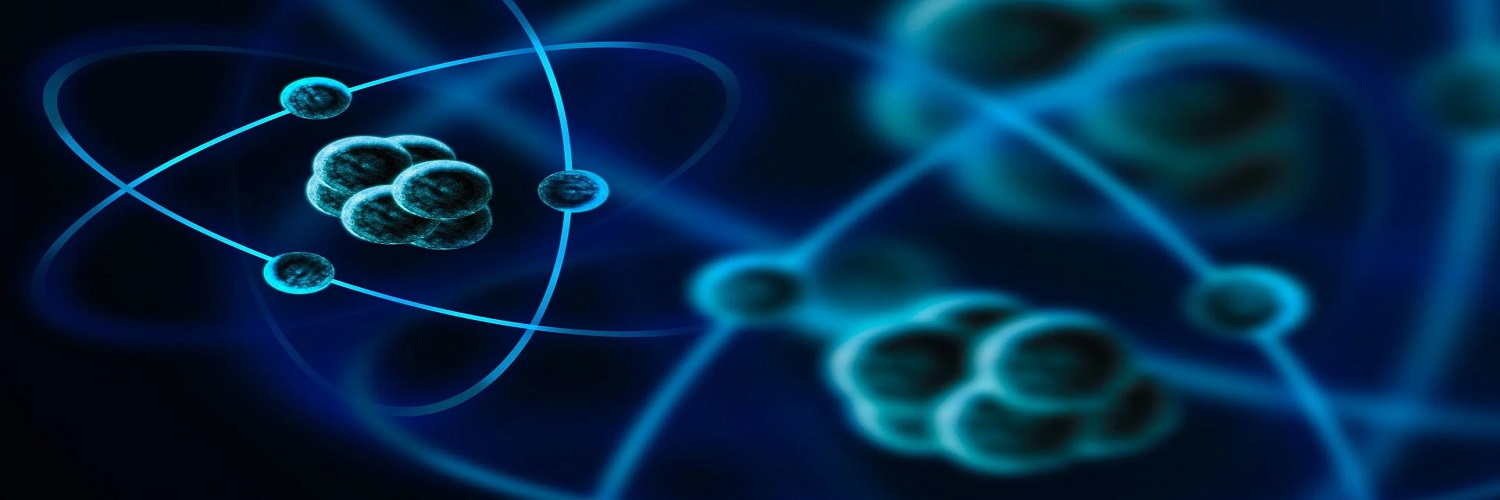
گرایش ذرات بنیادی یکی از گرایش های فیزیک در دانشگاه فردوسی مشهد می باشد.
موضوعات مورد علاقه پژوهشگران این گرایش عبارتند از:
آزمون تجربی نظریه QCD
مطالعه توابع ترکش
مطالعه پراکندگی ژرف ناکشسان و توابع ساختار هادرون ها
مطالعه ساختار اسپینی نوکلئون ها
فیزیک پلاسم
آشوب


- news
- event
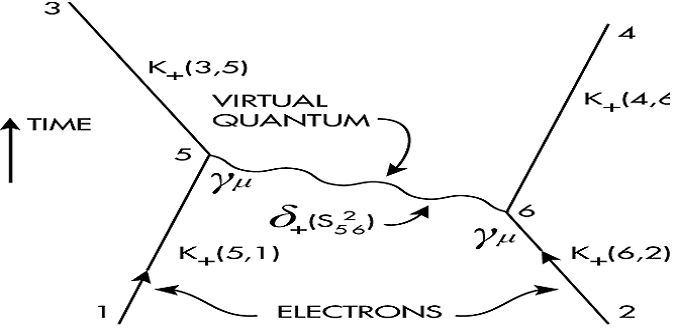
In particle physics, an elementary particle or fundamental particle is a subatomic particle that is not composed of other particles.[1] Particles currently thought to be elementary include electrons, the fundamental fermions (quarks, leptons, antiquarks, and antileptons, which generally are matter particles and antimatter particles), as well as the fundamental bosons (gauge bosons and the Higgs boson), which generally are force particles that mediate interactions among fermions.[1] A particle containing two or more elementary particles is a composite particle.
Around 1980, an elementary particle's status as indeed elementary – an ultimate constituent of substance – was mostly discarded for a more practical outlook,[1] embodied in particle physics' Standard Model, what's known as science's most experimentally successful theory.[4][6] Many elaborations upon and theories beyond the Standard Model, including supersymmetry, double the number of elementary particles by hypothesizing that each known particle associates with a "shadow" partner far more massive,[7][8] although all such superpartners remain undiscovered.[6][9] Meanwhile, an elementary boson mediating gravitation – the graviton – remains hypothetical.[1] Also, according to some hypotheses, spacetime is quantized, so within these hypotheses there probably exist "atoms" of space and time themselves.